
Starting a repossession business realistically takes $55,000 to $110,000 to get one truck on the road and stay solvent through your first six months. Most of that isn’t the truck — it’s insurance, licensing, and working capital to float net-30 payment terms. Contrary to what you’ll read elsewhere, most repo operators do not need a commercial driver’s license. Federal CDL rules kick in at 26,001 lbs, and a pickup with a slide-in wheel lift towing a passenger car stays well under that.
Repo work isn’t glamorous. You’ll deal with people on the worst day of their month, and the job carries real physical risk. But the demand is there. Cox Automotive data reported by Bloomberg put 2024 repossessions at roughly 1.73 million vehicles — up 16% year over year and the highest level since 2009. Subprime auto delinquencies hit their highest point since tracking began in 1994. Lenders need capacity, and completion rates on assignments have been falling, which means there’s room for agencies that can actually close.
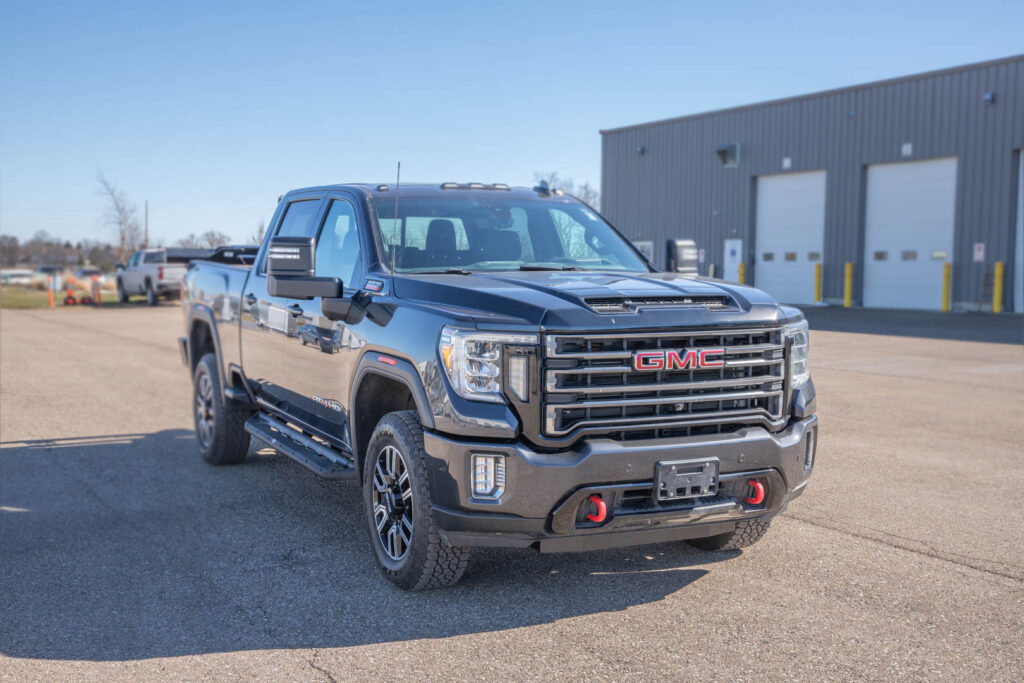
Here’s what it takes to start a repo business:
1. Learn Your State’s Repossession Laws
Every state has different rules for vehicle repossession. Some require a training course and a state exam before you can operate. Others just want a business license. California charges $1,067 for an agency license and runs a background check. Michigan charges $225 and gives you a test. Texas doesn’t license repo at all, but it does license towing.
One principle runs through all of it: repossession is legal without a court order, but only up to a point. Cross that point and you’re exposed — to lawsuits, to license trouble, and to losing lender contracts. Where exactly the line sits is decided by state courts, and it isn’t the same everywhere.
This is worth getting professional guidance on before you take your first assignment, not after. Talk to an attorney licensed in your state, and look up your requirements through the FTC’s vehicle repossession rules and the American Recovery Association’s state directory.
The other reason to start by freelancing or apprenticing with an established agency: you learn where that line sits in your state from people who’ve been operating on the right side of it for years.
2. Find Out Whether You Need a CDL
A commercial driver’s license is required when a single vehicle has a GVWR of 26,001 lbs or more, or when a combination has a GCWR of 26,001 lbs or more and the towed unit is rated over 10,000 lbs. A one-ton pickup with a slide-in wheel lift towing a passenger car doesn’t necessarily meet those thresholds, but it’s still important to familiarize yourself with the local, state and federal laws and regulations that apply to you.
Here’s a video we put together that touches on the concept of GVWR (Gross Vehicle Weight Rating): https://www.youtube.com/watch?v=wsrj0luBFfg
What definitely applies once you cross 10,001 lbs is a separate set of rules. At that weight your rig is a commercial motor vehicle under FMCSA Part 390 even without a CDL, which can mean:
- A USDOT number (required for interstate commerce, and for intrastate operation in many states)
- A DOT medical examiner’s certificate
- A driver qualification file
The practical takeaway: the vehicle you need may already be in your driveway. A three-quarter-ton or one-ton pickup rated at 11,000 lbs GVWR or better is a legitimate repo truck once it’s properly equipped.
3. Register Your Business and Get Licensed
There is no federal repossession license. Requirements are set state by state and fall into three categories: states that license the agency, states that license the individual agent, and states with no repo-specific license at all. Fees range from roughly $50 for a basic business license to $1,067 for a California repossession agency license.
An LLC is the standard structure for a new repo business — fast to form and it limits personal liability, which matters in an industry with this much physical and legal exposure. Filing fees run roughly $50 to $500 depending on your state.
Where a repo-specific license exists, apply for it first; some states require it before they’ll issue your business license. A few concrete examples:
- California licenses the agency through the Bureau of Security and Investigative Services. The initial Repossession Agency license application fee is $1,067. Employee registrants pay $75 plus DOJ and FBI fingerprint fees, and the qualified manager must pass a licensing exam.
- Michigan licenses through LARA — $225 for an owner/manager license, $85 for non-owner/manager, plus a state exam. (More detail in our post on how to get a repo license.)
- Pennsylvania licenses through the Department of Banking and Securities: $350 initial fee plus a $5,000 bond.
- Louisiana licenses individual repossession agents and apprentices through the Office of Financial Institutions.
- Texas and Virginia have no repossession license, but require towing licensure or tow truck registration.
Background checks and fingerprinting are common in licensing states. Several accept CARS certification (covered in Step 8) as the training requirement.
4. Build a Realistic Startup Budget
Plan on $55,000–$110,000 to launch a single-truck repo business and survive your first six months. Equipment is the visible cost, but insurance ($8,000–$25,000 a year) and working capital ($15,000–$30,000) are what actually determine whether a new agency makes it, because lender payment terms typically run net-30 or longer.
You’ll find guides claiming you can start for under $10,000. Those numbers don’t survive contact with an insurance quote. Here’s a more honest breakdown:
Lean solo start: pickup truck and slide-in wheel lift
| Line item | Cost |
| Used pickup, 11,000+ lb GVWR | $15,000–$35,000 |
| Slide-in wheel lift (Minute Man XD) | $15,900 + freight |
| Suspension upgrade (springs or airbags) | $500–$2,500 |
| LLC formation and licensing | $100–$1,500 |
| Insurance, first year | $8,000–$25,000 |
| Working capital, 4–6 months | $15,000–$30,000 |
| Total | ~$55,000–$110,000 |
Two to three trucks
Roughly $30,000–$50,000 per additional truck-and-lift combination, plus incremental insurance. Most successful startups scale here as soon as capital allows, because more trucks on the road means more simultaneous recoveries and faster payback.
Wrecker-based fleet
A new flatbed or purpose-built wrecker starts around $90,000–$100,000+ per unit before you’ve hired anyone. Used medium-duty wheel-lift trucks run roughly $30,000–$80,000 depending on age and build.
That gap is the whole strategic question for a new agency, and it’s the subject of the next step.
5. Establish a Location and a Secured Lot
Choose a central location that minimizes drive time to your typical pickup radius, because every mile your trucks travel empty is a mile that isn’t making money. At minimum, you’ll need office space for a desk, phone line, and computer for skip tracing and paperwork. If you’re taking on lender contracts that require vehicle storage, you’ll also need a secured, fenced lot: most lienholders won’t work with agencies that can’t guarantee chain-of-custody on recovered vehicles.
6. Choose Your Truck and Towing Equipment
A slide-in wheel lift mounts to a pickup you may already own and handles the overwhelming majority of light-duty repossession work. It costs a fraction of a $90,000+ wrecker, which means the same capital can put two or three trucks on the road instead of one.
For repo specifically, that math drives everything. Recoveries are won on speed and coverage. Three trucks working three assignments beats one truck working one, and the debtor who spots your rig and moves the car doesn’t wait for you to circle back.
The Minute Man XD is $15,900, with a 3,500 lb lift capacity and 7,500 lb tow capacity. It bed-mounts to the frame with no frame modification and runs on a hydraulic electric pump with in-cab control. It requires a truck with at least a 10,000 lb GVWR — 11,000 or better is what we recommend, and it isn’t suitable for half-ton pickups. Plan on additional rear leaf springs.
Two details matter more than they might appear when you’re budgeting:
The lift outlives the truck. Operators typically move a Minute Man unit through two or three trucks over its service life, sometimes more. The truck wears out; the lift keeps earning. That changes the calculation on a $15,900 purchase — you’re not amortizing it against one vehicle, you’re amortizing it against a decade of work.
Parts stay available. The XD has been in continuous production since 2012, and parts for those early units are still in stock. For a first-time buyer worried about being stranded with orphaned equipment in five years, that’s the answer.
Still deciding between equipment types? Our breakdown of wrecker vs. tow truck walks through where each one makes sense.
7. Get Insurance and Bonding
Lenders generally require at least $1 million in auto liability and $1 million in general liability before they’ll contract with a repossession agency. A realistic total insurance program for a one- to two-truck operation runs $8,000–$25,000 per year, with commercial auto as the largest single line item at roughly $4,000–$6,600 per truck annually.
You’ll see claims that general liability alone costs $1,000–$5,000 a month. It doesn’t. GL for a small tow or repo operation typically runs closer to $100–$140 per month. The cost stacks up across the full program, not in any single policy:
- Commercial auto liability — $1M, required on every tow vehicle
- General liability — $1M, typically bundled rather than sold standalone
- Physical damage — around $500K
- On-hook / cargo — around $500K, covering the vehicle while in tow
- Garagekeepers — legal liability or direct primary. Lenders and forwarders often require direct primary, which pays regardless of fault
- Wrongful repossession and drive-away coverage — for taking the wrong vehicle or a procedurally improper recovery
Repo carries higher premiums than plain towing because of night work, confrontation risk, high-value collateral, and storage exposure. Get quotes from carriers that write repossession specifically — general commercial auto agents often won’t touch it.
On bonds: if your state requires a surety bond, expect something in the range of $5,000 to $50,000, not the seven-figure numbers that circulate online. Colorado requires $50,000, Washington DC $25,000 for an auto repossession business, Maine $15,000, Michigan $10,000, Pennsylvania $5,000. Bond premiums typically run 1–3% of the bond amount for applicants with decent credit — a $50,000 Colorado bond costs roughly $375 a year. Confirm your state’s amount through the ARA state requirements directory before you quote anyone.
8. Set Up Your Location and Secured Lot
Pick a location central to your pickup radius, because every mile driven empty is a mile that doesn’t pay. If you plan to take lender contracts requiring vehicle storage, you’ll need a fenced, secured lot — most lienholders won’t work with an agency that can’t guarantee chain of custody on recovered vehicles.
At minimum you need somewhere to work: a desk, a phone line, and a computer for skip tracing and paperwork. Lot costs vary too widely by market to generalize, but the storage requirement isn’t optional if you want direct lender work. Storage also becomes a revenue line — agencies commonly bill $25–$50 per day after a grace period, alongside key-making, personal property handling, and transport.
9. Get on the Platforms Lenders Use, and Line Up Your First Contracts
Repossession assignments reach agencies two ways: directly from a lender or credit union, or through a national forwarding company that locates the asset and sub-assigns it. Direct contracts pay materially better. Forwarders pay less but provide volume — and per CFPB data, forwarder use rose from 31% of assignments in 2018 to a peak of 69% in late 2022.
Software is effectively mandatory.
Recovery Database Network (RDN) has been the industry system of record since 2002, with 600+ lenders and 2,500+ service providers using it to assign and track cases. Its Clearplan field app handles real-time updates, on-hook status, and digital condition reports. Other platforms in use include iRepo, RecoveryVision, and MBSi. You don’t choose your platform — the lenders and forwarders assigning to you do. RDN doesn’t publish pricing; agencies onboard by contacting them, and are typically pulled in by the clients who want to assign work.
Certification is expected.
The Certified Asset Recovery Specialist (CARS) credential from RISC is accepted by all major lenders and satisfies the training requirement in several licensing states. The 2026 national certification is $99. It’s a lifetime certification with annual continuing education. Anyone on your team involved in recoveries should hold one.
Expect to be vetted.
Lenders and forwarders require insurance verification, background checks, on-site inspections, and — for larger relationships — SOC-type audits and secure data handling. Vendor management firms like MBSi handle this on lenders’ behalf.
Understand the pay.
A standard involuntary repossession commonly pays a flat $275–$450. CFPB analysis pegged the average around $350. Direct contracts sit at the top of that range; forwarder work at the bottom, since the forwarder is billing the lender roughly $325 and paying you $225–$250. Payment terms typically run net-30 or longer, and you don’t get paid on assignments you can’t close. That’s why the working capital line in Step 4 isn’t optional.
Start with local credit unions and small lenders — better margins, and they’re more willing to take on a new agency than a national forwarder is.
10. Budget for Repo-Specific Technology
Modern repo operations run on more than a truck. License plate recognition, skip tracing tools, digital dispatch, and photographic condition reports at pickup are close to standard for any agency that wants lender contracts — and lenders increasingly require digital chain-of-custody documentation as a condition of assignment.
License plate recognition is the biggest lever. Digital Recognition Network (DRN) is the dominant provider; its mobile LPR cameras run around $275 per month, with plate lookups around $20 and live alerts around $70. DRN’s crowdsourced database holds billions of scans contributed by affiliate spotter vehicles, and agents can earn scanning bonuses. One compliance note: LPR is legally restricted in some states — check before you invest.
Skip tracing, GPS dispatch, and digital condition reporting are largely handled inside RDN and Clearplan. Budget for this from day one rather than retrofitting later. Our post on taking your repo company to the next level with technology goes deeper on the operational side.
11. Write a Business Plan, Then Get on the Road
Before you hire drivers or sign a lender contract, put numbers to the business: monthly revenue needed to cover fixed costs, target contracts and expected volume, break-even timeline, and growth milestones for the first 6–12 months.
At minimum your plan needs to answer how many recoveries per month cover insurance, lot rent, and truck payments — and how long you can operate before your first net-30 check clears.
If you’re hiring, vet carefully. Your drivers are the face of the business in confrontational situations, and a bad hire creates liability exposure fast. Look for prior repo or towing experience and confirm CARS certification.
Then get to work.
Kickstart Your Repo Business with Minute Man Wheel Lifts
The Minute Man XD is built for repo work: it installs on a pickup you may already own, one person can operate it, and it’s durable for hookup-and-go pace, day after day. At $15,900 against $90,000+ for a new wrecker, the difference for a new agency is the difference between one truck on the road and three.
We’ve been building these in the USA since before the XD launched in 2012, and we still stock parts for those original units. When you call with a question, you get someone who knows the equipment.
Have questions about which setup fits your truck? Call 877-593-6959 or contact us online.
We also have guidance for truck fit on our Wheel Lift product page.
Legal Disclaimer: The material and information contained on this website is for general information purposes only. You should not rely upon the material or information on this website as a basis for making business, legal, or other decisions. Consult a licensed attorney or your state’s regulatory agency for guidance specific to your situation.
Frequently Asked Questions
Realistically, $55,000 to $110,000 to put one truck on the road and cover six months of operating expenses. That breaks down to roughly $15,000–$35,000 for a used pickup, $15,900 for a Minute Man XD slide-in wheel lift, $8,000–$25,000 for a first year of insurance, and $15,000–$30,000 in working capital to float net-30 lender payment terms. However, a wrecker-based operation costs substantially more, since new flatbeds start around $90,000 per unit.
Not always, but research your local, state, and federal laws and regulations to be certain. You’re required to have a commercial driver’s license when a vehicle is rated at 26,001 lbs GVWR or more (or when a combination reaches 26,001 lbs GCWR with a towed unit over 10,000 lbs). A one-ton pickup with a slide-in wheel lift towing a passenger car falls well below both thresholds. However, once any rig exceeds 10,001 lbs, it may require a USDOT number and a DOT medical certificate even without a CDL.
It depends on the state. Some states license the repossession agency, some license individual agents, and some have no repo-specific license at all. California’s agency license application fee is $1,067 and requires an exam plus DOJ and FBI background checks. Michigan charges $225 for an owner/manager license. Conversely, Texas and Virginia have no repo license but require towing licensure. Check the American Recovery Association’s state requirements directory before you spend money on equipment.
Generally, lenders require $1 million in auto liability and $1 million in general liability before contracting with an agency, plus on-hook coverage for vehicles in tow and garage keepers coverage for vehicles in storage. A full program for a one- to two-truck operation typically costs $8,000–$25,000 per year. Surety bonds, where required, run $5,000–$50,000 depending on the state — not the seven-figure amounts sometimes cited online.
A standard involuntary repossession commonly pays a flat fee of $275 to $450, averaging around $350. Direct contracts with lenders and credit unions pay at the higher end. Work received through a national forwarding company pays less — often $225 to $250 — because the forwarder retains a margin on what it bills the lender. Agencies bill separately for storage, key-making, and transport.
For light-duty repossession work, a slide-in wheel lift is a far lower-cost entry point and handles the large majority of recoveries. A wheel lift runs roughly $8,000–$22,000 versus $90,000 or more for a new wrecker, which lets a new agency field two or three trucks for the price of one. Wheel lifts also transfer between trucks, so the equipment typically outlasts the vehicle.
It depends on how quickly you secure lender contracts, but budget for four to six months of operating expenses as a buffer. Payment terms with lenders and forwarders typically run net-30 or longer, and you aren’t paid on assignments you can’t close — so revenue lags activity even after your trucks are busy.
Assignments come either directly from lenders and credit unions or through national forwarding companies that locate the vehicle and sub-assign the recovery. Most agencies need to be on the Recovery Database Network (RDN) or a comparable platform, since that’s how lenders distribute and track cases. Many lenders also require CARS certification from RISC, which costs $99 for the 2026 national certification.


